Fertility & Wellbeing
Your body isn't broken. But it might be telling you something. The question is whether anyone has helped you listen.
Wellbeing isn't a nice-to-have in fertility preparation. It's physiology.
Stress, sleep, and exercise aren't lifestyle extras that sit alongside your fertility plan. They are active biological inputs that directly affect your hormones, your ovulation, your sperm quality, and your body's readiness for pregnancy.
Understanding how they're working for you — or against you — is part of every conversation within Fertility-Fit.
Stress — it's not about doing less. It's about recognising when your body is struggling.
Let's be honest about something first: telling a driven, high-achieving woman to "just relax" is not fertility advice. It's an insult.
Many women function brilliantly under pressure. Their bodies are adapted to high-demand environments and their hormones reflect that. High-stress roles don't automatically mean hormonal disruption — and assuming they do misses the point entirely.
What matters is whether your body is coping — or whether it's showing signs that it isn't.
When cortisol — your primary stress hormone — becomes chronically elevated beyond what your body can manage, it begins to suppress the hormonal signals needed for ovulation. It can shorten the luteal phase, disrupt progesterone production, and create a physiological environment that is actively working against conception. In men, chronically elevated cortisol suppresses testosterone production and reduces sperm quality.
The signs that stress is affecting your fertility aren't always obvious. Cycle changes, sleep disruption, fatigue that doesn't resolve, mood shifts, changes in libido — these are your body's signals. Not weaknesses. Data.
Within Fertility-Fit we look at your specific picture — your cycle patterns, your symptoms, your history — and help you identify whether stress is a contributing factor for you specifically. Not whether you have a stressful job. Whether your body is showing signs that it's struggling to adapt. That's a completely different question. And it's one worth asking.

Sleep — when your reproductive hormones do their most important work
Sleep is not passive recovery. It is the window during which your body regulates, repairs, and resets the hormonal systems that govern fertility.
Growth hormone, melatonin, LH, FSH, and progesterone — all are produced or regulated during sleep. Disrupted or insufficient sleep doesn't just make you tired. It disrupts the hormonal architecture that your reproductive system depends on.
Research consistently links poor sleep quality to irregular cycles, disrupted ovulation, and reduced fertility treatment outcomes in women. In men, poor sleep is associated with reduced testosterone levels, lower sperm concentration, and impaired sperm motility.
For women with PCOS or PMOS, sleep disruption has an additional layer of significance — poor sleep worsens insulin resistance and increases androgen levels, compounding the hormonal imbalance that's already making conception more difficult.
And shift work — a reality for many women in healthcare, including many of our clients — carries its own specific hormonal disruption profile that deserves individual assessment, not generic advice.
Within Fertility-Fit we look at your sleep picture as part of your full assessment — not as a tick-box question, but as a meaningful clinical input. If sleep is contributing to your hormonal picture, we'll identify it and give you practical, realistic strategies to address it.
Exercise — the dose makes the medicine
Exercise is one of the most powerful tools available for fertility preparation. It improves insulin sensitivity, reduces inflammation, supports hormone balance, and creates the kind of metabolic environment that supports conception.
But — and this is where the conversation gets nuanced — more is not always better. And the type of exercise matters as much as the amount.
For women:
For women with adrenal PCOS or PMOS, high-intensity exercise — particularly HIIT — can be actively counterproductive. Adrenal PCOS is driven by elevated cortisol and adrenal androgens, not insulin resistance. High-intensity training spikes cortisol further — adding fuel to the fire rather than dampening it. The right exercise for this group is lower-intensity, steady-state movement: walking, swimming, Pilates, yoga. Restorative rather than depleting.
For women who are sedentary, increasing movement meaningfully improves insulin sensitivity, reduces inflammation, and supports cycle regularity. For women who are over-training — and this is more common than most fertility advice acknowledges — pulling back can be the single most impactful change they make. Loss of periods, shortened luteal phases, and poor egg quality can all be signs that the exercise load is too high for what the body can currently sustain.
For men:
Exercise has a measurable positive effect on sperm quality — but again, the dose matters. Regular moderate exercise improves testosterone levels, reduces oxidative stress, and supports healthy sperm parameters. But excessive training, particularly endurance sport at high volume, has been associated with reduced sperm concentration and motility. Anabolic steroid use — even historical — can cause significant and sometimes long-lasting damage to sperm production that a standard semen analysis may not fully reveal.
Hot environments matter too. Saunas, hot tubs, and even prolonged laptop use on the lap can raise scrotal temperature enough to impair sperm production — a simple, entirely avoidable factor that most men have never been told about.
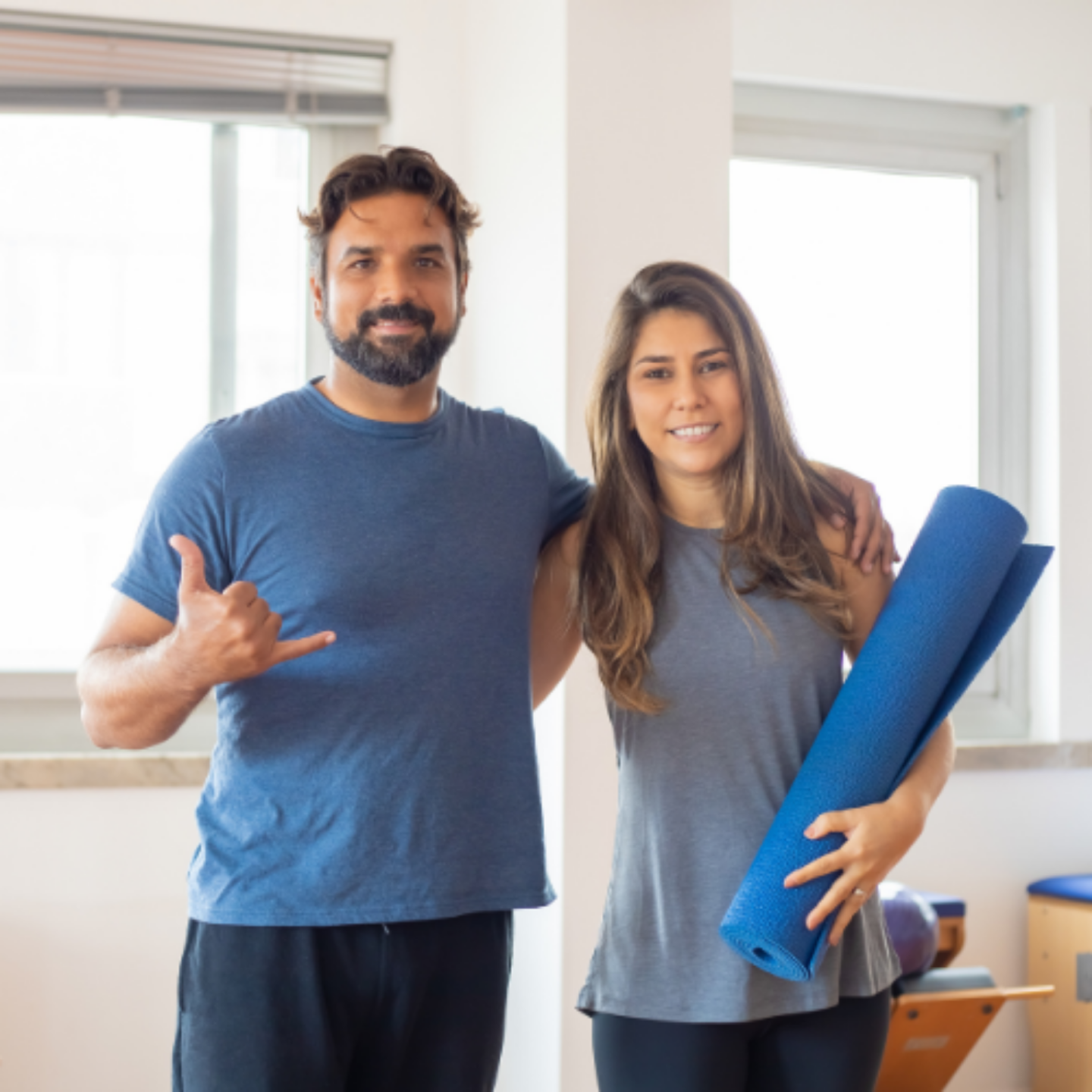
Within Fertility-Fit Graham brings his expertise as an award-winning fitness specialist and qualified PT to build an exercise picture for both of you — one that supports your fertility rather than working against it. Not a generic plan. An informed, specific assessment of what exercise is doing for your body right now, and what needs to change.
Wellbeing isn't about being perfect. It's about being informed.
You don't need to become a different person. You don't need to quit your job, run a marathon, or sleep eight hours in a silent room.
You need to understand what your body is telling you — and have someone in your corner who can help you read the signals, make the right adjustments, and build a plan that works for your actual life.
That's what we do.
Your body is working hard. Make sure the environment you're giving it is working with it — not against it.
Want to understand your wellbeing picture — for both of you? Book your Fertility Strategy Call and we'll look at the full picture together.

Nutrition
Supplements